
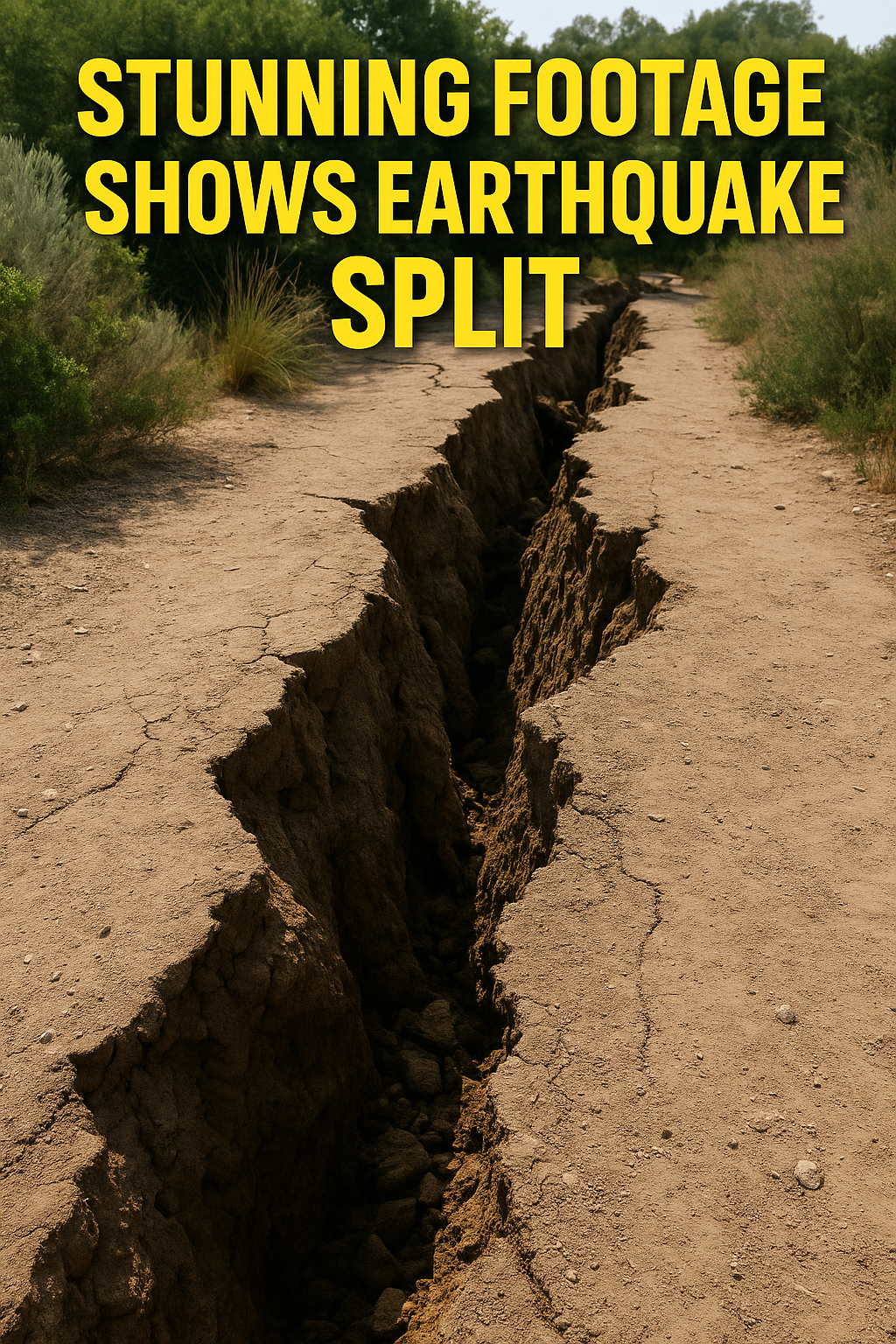
High-speed footage has recently unveiled an extraordinary and rarely seen phenomenon: an earthquake surface split in remarkable detail. This captivating visual evidence offers scientists and the public a unique glimpse into the dramatic forces at work during an earthquake, fundamentally transforming how we understand these natural disasters.
Capturing the Earthquake Surface Split in Real Time
Thanks to advancements in high-speed camera technology, researchers managed to record the moment an earthquake ruptured the Earth’s surface with breathtaking clarity. These cameras captured thousands of frames per second, enabling viewers to see the ground literally pulling apart, shifting, and fracturing in an instant.
Previously, the rapid nature of earthquake events made it nearly impossible to observe these movements with the naked eye or conventional video equipment. However, the high-speed footage bridges this gap, revealing the complex dynamics and sheer power involved in an earthquake’s initial rupture and subsequent propagation across the terrain.
Why High-Speed Footage Matters for Earthquake Science
This groundbreaking visual evidence is more than just compelling imagery; it provides researchers with critical data to deepen their understanding of seismic activity. By analyzing the footage frame by frame, scientists can study the speed and progression of surface ruptures, helping improve predictive models used in earthquake early-warning systems.
Moreover, observing how fault lines behave above ground clarifies the relationship between subsurface tectonic movements and surface-level impacts — crucial information for infrastructure planning and disaster preparedness in earthquake-prone regions. The footage essentially serves as a natural, high-definition laboratory experiment that’s impossible to replicate artificially.
The Impact of Seeing Earthquake Damage Unfold in High-Speed
For the general public, these visuals are not only stunning but also enlightening. Watching the surface split in real time drives home the immense forces at play during seismic events and underscores the importance of earthquake-resistant construction, community preparedness, and better alert mechanisms.
In an age where natural disasters can feel distant or abstract, seeing the Earth’s surface change so vividly and suddenly connects people to the reality of earthquakes like never before. This emotional engagement can foster greater support for scientific research and public safety initiatives while promoting awareness of seismic risks.
What’s Next for Earthquake Research and Technology?
The success of capturing these seismic moments in high speed bodes well for future research using cutting-edge imaging technologies. Scientists are now exploring ways to deploy more high-speed cameras in active fault zones worldwide to gather additional data on various earthquake scenarios.
Additionally, combining high-speed footage with other monitoring tools — such as seismic sensors, GPS, and satellite imagery — could enable a more comprehensive understanding of earthquakes from the initial rupture to aftershocks. These advancements may ultimately lead to breakthroughs in minimizing earthquake damage and saving lives.
—
In summary, the stunning high-speed footage revealing an earthquake surface split offers an unprecedented window into the raw power of tectonic forces. Beyond its visual allure, this technological breakthrough is a game-changer for both earthquake science and public awareness, bringing us closer to unraveling the mysteries beneath our feet.