
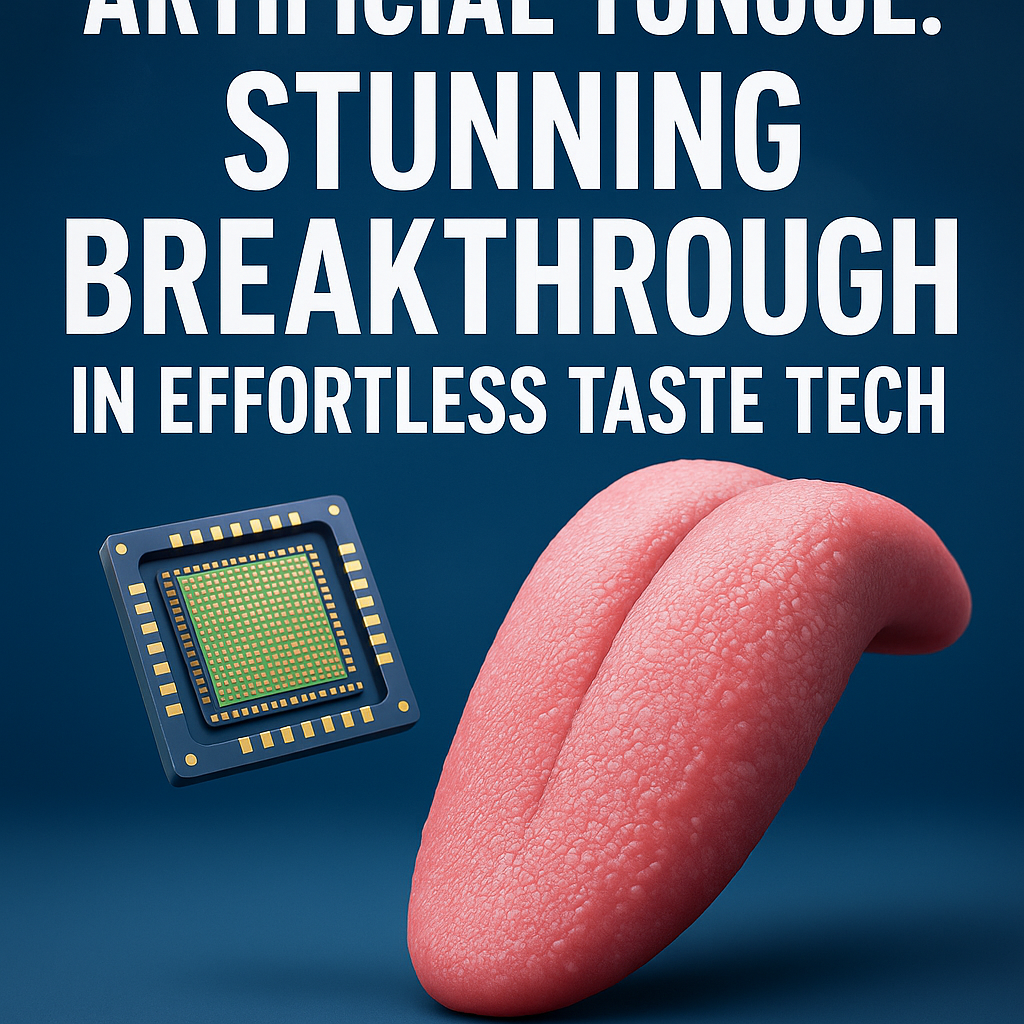
Artificial Tongue: Stunning Breakthrough in Effortless Taste Tech
Artificial tongue technology has taken a gigantic leap forward with recent breakthroughs promising to revolutionize how we experience and analyze taste. This cutting-edge innovation aims to mimic the human tongue’s ability to detect and interpret flavors, opening new horizons in food science, healthcare, and even safety testing.
Traditionally, taste testing has relied heavily on human panels or chemical analysis—methods that can be subjective, time-consuming, and expensive. Enter the artificial tongue, a sophisticated device designed to “taste” substances rapidly and accurately without human involvement. Scientists have now developed an enhanced version that captures nuanced flavor profiles with unprecedented precision.
How the Artificial Tongue Works
This artificial tongue uses a combination of biosensors, electronic circuits, and machine learning algorithms to identify flavor components such as sweet, salty, bitter, sour, and umami. It can detect chemical compounds in samples much like our own taste buds but with superhuman sensitivity. By analyzing electrical signals generated from contact with various substances, the device converts these into digital data for real-time taste profiling.
The recent advancements focus on making this process effortless and scalable for practical applications. Unlike earlier prototypes that required complex preparation and calibration, the new system is compact, user-friendly, and faster — truly making taste technology accessible outside specialized laboratories.
Potential Applications Driving the Hype
Food manufacturers stand to gain immensely by employing the artificial tongue to maintain quality control and develop new flavors without extensive human testing. Imagine chefs and companies instantly knowing how a product will taste and making tweaks in minutes rather than weeks.
In the medical sector, this technology could help diagnose diseases through saliva analysis, offering a non-invasive and painless alternative to traditional tests. It can also detect harmful substances or contaminants in food and water, ensuring consumer safety.
Why This Breakthrough Matters
By delivering high accuracy without the “trial and error” associated with human taste tests, the artificial tongue can dramatically reduce costs and time in multiple industries. It also democratizes taste analysis — enabling small businesses, researchers, and health professionals to harness sophisticated flavor detection.
In a world increasingly driven by digital solutions, the artificial tongue represents a stunning breakthrough in effortless taste tech. As it moves from lab to market, it’s only a matter of time before we see this technology embedded into kitchens, clinics, and factories worldwide.
Looking Ahead: The Future of Taste
With continuous improvement, artificial tongue technology might one day become a common household gadget, letting consumers scan products or even meals before buying or eating. Coupled with AI, it could recommend personalized diets tailored to individual taste preferences and nutritional needs.
In summary, the artificial tongue embodies the perfect blend of biology and technology. This remarkable advancement is not just about replicating human senses — it’s about enhancing our capabilities and redefining how we interact with the world of taste.
As this technology evolves, one thing is clear: the future of flavor is here, and it’s effortlessly digital.