
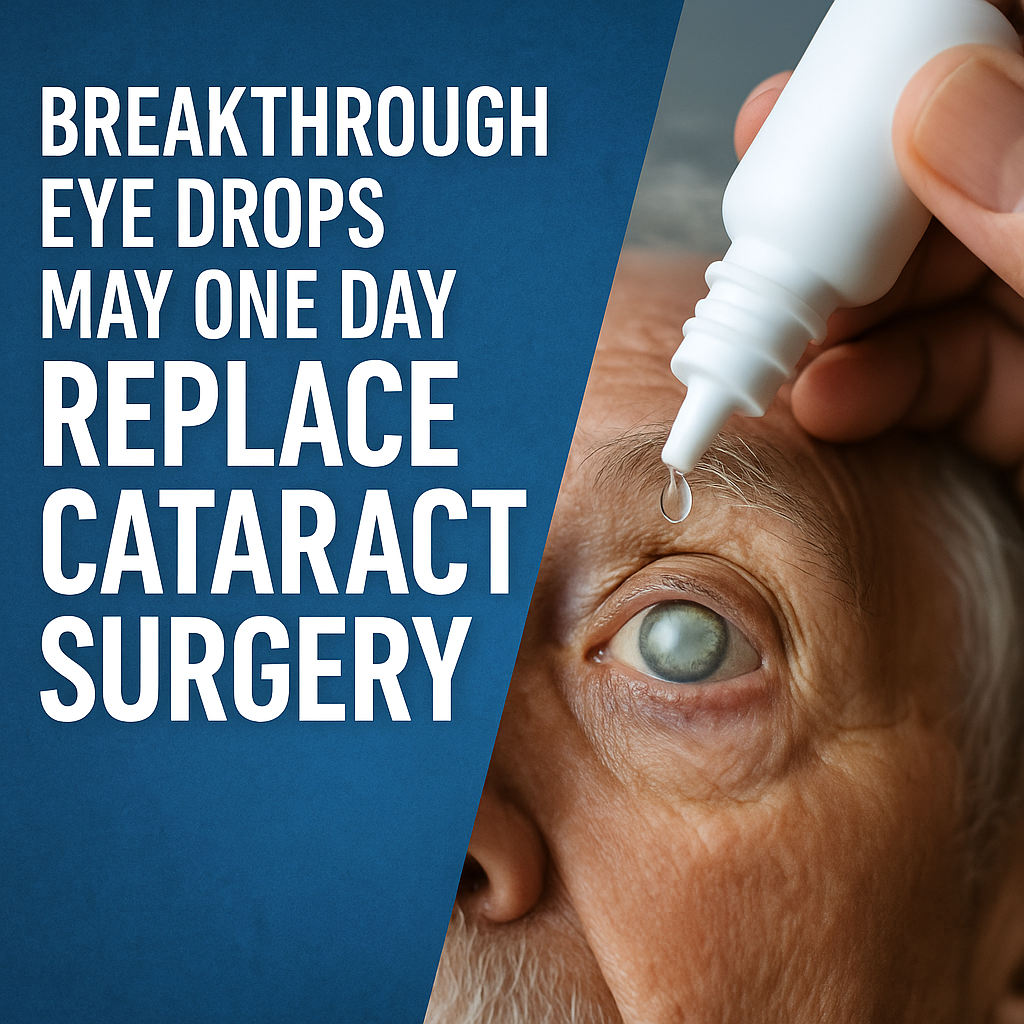
In a potential medical game-changer, scientists have developed experimental eye drops that may dissolve cataracts—potentially eliminating the need for invasive surgery, which is currently the only available treatment for this leading cause of blindness.
This innovation targets the root cause of cataracts: misfolded proteins that clump together and cloud the eye’s natural lens. If successful in further trials, these eye drops could revolutionize eye care globally—particularly in underserved regions where access to surgery is limited or nonexistent.
👁️ What Causes Cataracts—and Why They’re So Hard to Treat
Cataracts form when proteins in the eye’s lens lose their proper shape and begin to aggregate, forming cloudy patches that obscure vision. They typically develop with age, but can also be triggered by diabetes, UV exposure, smoking, or certain medications. According to the World Health Organization, cataracts are responsible for more than half of all blindness worldwide.
The standard treatment today involves surgically removing the clouded lens and replacing it with an artificial one. While effective, surgery is not always available or affordable—especially in lower-income countries or remote regions.
💧 The Promise of Cataract-Dissolving Eye Drops
Back in 2015, a team led by Dr. Kang Zhang at the University of California, San Diego, discovered a molecule called lanosterol, a naturally occurring steroid, which showed potential for reversing cataracts in dogs and lab animals by helping misfolded proteins return to their correct shape.
Since then, research has advanced significantly. Scientists have been developing lanosterol-based or similar compounds that can:
- Penetrate the eye’s lens,
- Reach the cataract site,
- And disrupt or dissolve the clumps of proteins responsible for the cloudiness.
A 2023 preclinical study using optimized versions of these compounds in nanoparticle form showed restored transparency in cataract-affected lenses in mice. Researchers are now working toward human clinical trials to test both safety and effectiveness.
🌍 Global Impact: A Drop of Hope for Millions
If these eye drops prove successful, the implications are staggering. They could offer:
- A low-cost, non-surgical alternative for cataract treatment,
- Expanded access to care in regions where surgical infrastructure is lacking,
- Early intervention for people with developing cataracts, possibly halting the disease before surgery is ever needed.
In places like sub-Saharan Africa and parts of Asia, where ophthalmologists are scarce and surgical wait times can be years, such eye drops could change lives.
🧪 What Comes Next?
While early results are promising, scientists caution that human trials are still needed to confirm long-term safety, effectiveness, and proper dosage. Regulatory hurdles and formulation stability for mass production are also challenges that must be addressed.
Dr. Zhang and his colleagues, along with several biotech startups, are now racing to bring these treatments into clinical testing. Some aim for human trials within the next 1–2 years, depending on funding and regulatory approvals.
👓 The Future of Vision Care?
For now, cataract surgery remains the gold standard—but if research continues to advance, a future where people can reverse vision loss with just a few eye drops a day may be closer than we think.
And for the millions currently facing blindness due to untreated cataracts, that future can’t come soon enough.