
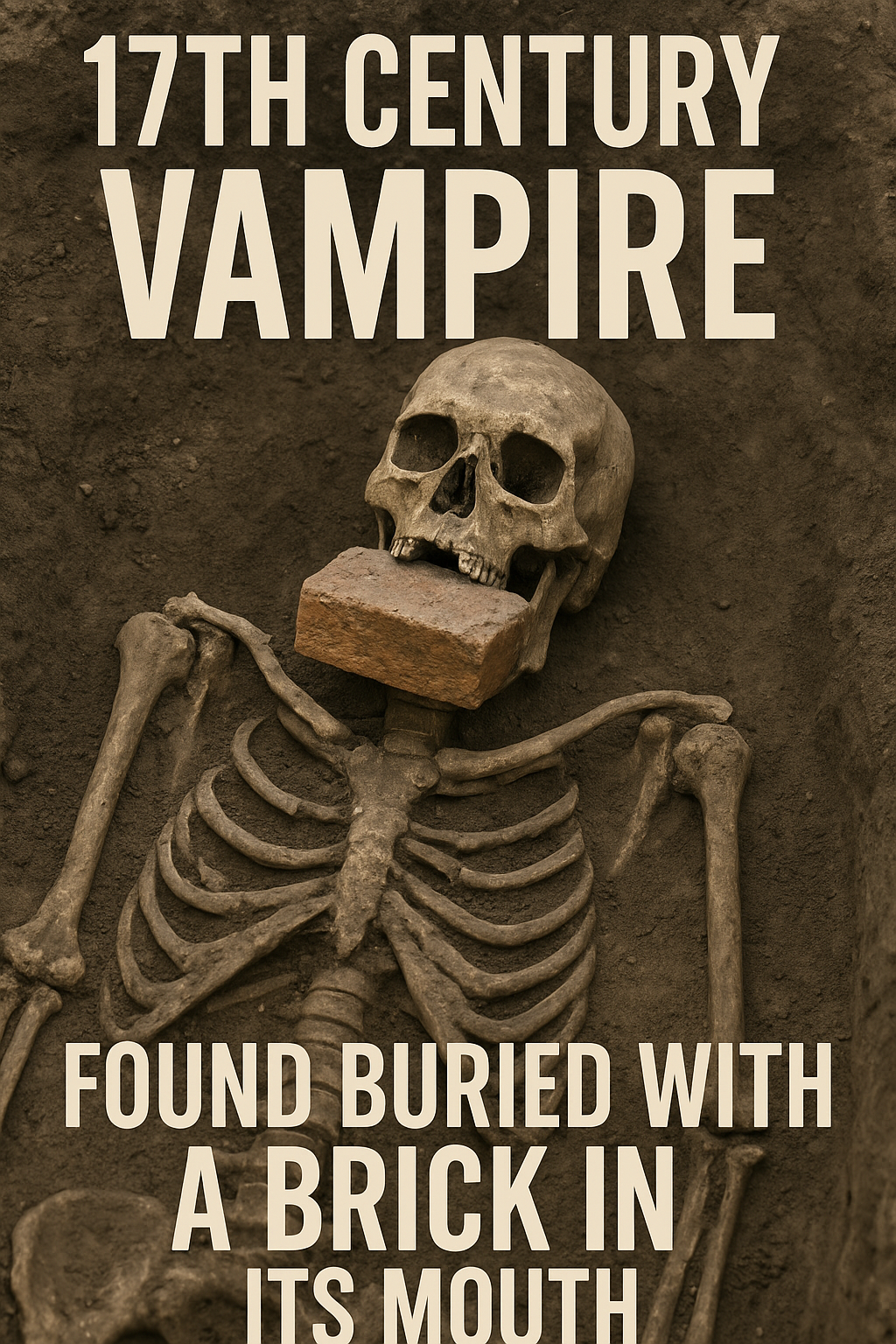
A 17th Century Vampire Was Found Buried With a Brick in Its Mouth: Unveiling Historical Anti-Vampire Practices
A 17th century vampire was found buried with a brick in its mouth, a chilling discovery that offers a glimpse into the centuries-old fears and superstitions surrounding supernatural beings. This extraordinary archaeological find sheds light on how people of the era attempted to prevent the dead from rising and haunting the living—a practice that might seem strange today but was taken very seriously in the past.
The Discovery of the Vampire Burial
In 2023, archaeologists excavating a rural cemetery in Eastern Europe uncovered a skeleton dating back to the early 1600s, notable for having a large, carefully placed brick inserted in its mouth. Such a burial method immediately drew attention because it deviated sharply from normal burial customs. Historically, bricks, stones, or even metal objects placed in or around the mouths of the deceased were often part of rituals intended to “seal” the mouth, preventing the dead from biting or feeding on the living as vampires were believed to do.
This particular burial aligns with recorded practices from the 17th century, a period rife with vampire lore and legend, especially in regions like what is today Romania, Poland, and Serbia. Fear of vampirism was so widespread that communities took proactive measures to protect themselves from the undead.
Understanding the Context: Why the Brick?
During the 17th century, the notion of vampires was not just folklore but a widely accepted explanation for unexplained deaths and illnesses. When someone died under mysterious circumstances or their corpse showed signs of decay inconsistent with the expected timeline, locals often suspected vampirism. Such corpses were sometimes exhumed, and specific rituals were performed, including the insertion of objects like bricks or wooden stakes into the body or mouth.
These objects served a symbolic and practical purpose: the brick in the mouth was believed to stop the supposed vampire from rising, biting, or feeding on the living. It was thought that by physically blocking the mouth, the undead would be unable to terrorize the community from beyond the grave.
The Historical Significance of Vampire Burials
The discovery of such a burial is more than a macabre curiosity; it provides important insight into the intersection of folklore, medicine, and societal fears during the early modern period. At the time, lack of scientific understanding about decomposition allowed myths about the dead to flourish. Vampires were blamed for spreading disease and death, with these burial customs illuminating the lengths to which societies would go to protect themselves.
Studies on vampire burials offer valuable information about local customs, religious beliefs, and the psychological impact of fear on communities. They also showcase how grave management evolved, blending ritualistic and practical concerns.
What This Discovery Tells Us Today
This well-preserved find reminds modern audiences of the cultural significance of folklore and how it can influence social behaviors, especially during periods of uncertainty. It also prompts reflection on how contemporary society addresses its own fears, sometimes through ritualized or symbolic actions.
Moreover, studying such burials enriches our understanding of history by connecting us with the lives and beliefs of people who lived centuries ago, revealing how they coped with death, disease, and the unknown.
The uncovering of a 17th century vampire buried with a brick in its mouth not only captivates the imagination but also deepens our appreciation of historical practices and human fears. It is a haunting testament to the power of folklore and the enduring quest to make sense of life and death throughout history.